Part-147 · Part-66
Simulation for maintenance training
Aircraft maintenance technician training combines theory, practical training in the workshop and type training. Simulation complements real equipment, under the control of the approved programme.
/ CBT — computer-based training
Interactive digital modules: system descriptions, animations, exercises, assessments. They mainly support theoretical training and preparation for practical sessions.
/ Virtual reality (VR)
The trainee works in a fully digital environment: locating components, walking through a procedure, getting familiar with hard-to-reach areas. VR does not reproduce physical effort, torque or real touch.
/ Augmented reality (AR)
Digital information is overlaid on real equipment or a mock-up: identification, procedure steps, diagrams. It connects documentation to the task.
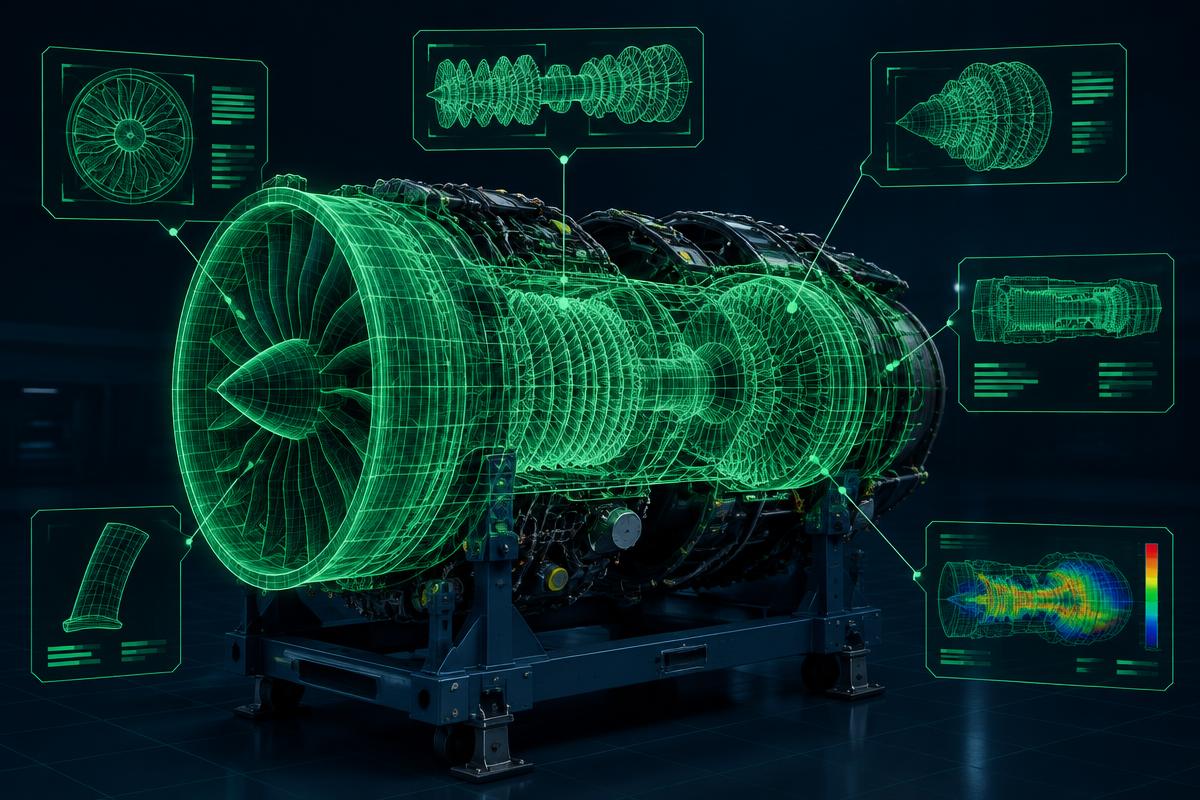
/ Digital twins
A digital model of a system, fed by design or operational data, that reproduces its behaviour. In training it shows the effect of a failure or adjustment. Its value depends on the quality and currency of the source data.
/ Procedure trainers and mock-ups
Panel trainers, engine run-up or troubleshooting simulators, system mock-ups and real demonstration items allow procedures and fault finding to be rehearsed before working on the aircraft.
/ Place within Part-147 and Part-66
Practical training requirements, notably for type training under Part-66 Appendix III, define what may be done on simulated devices and what must be done on the aircraft or representative equipment. The use of simulation must be described and justified in the programme approved by the competent authority.
i4M · AeroPlanAI
Designing digital modules and planning training
i4M supports organisations in designing digital training modules. Scheduling of sessions, instructors and resources can be organised with AeroPlanAI.
Discover AeroPlanAI →EASA
This site presents general concepts. Only official EASA publications (regulations, CS, AMC and GM) are authoritative.
See the texts on the EASA website →